
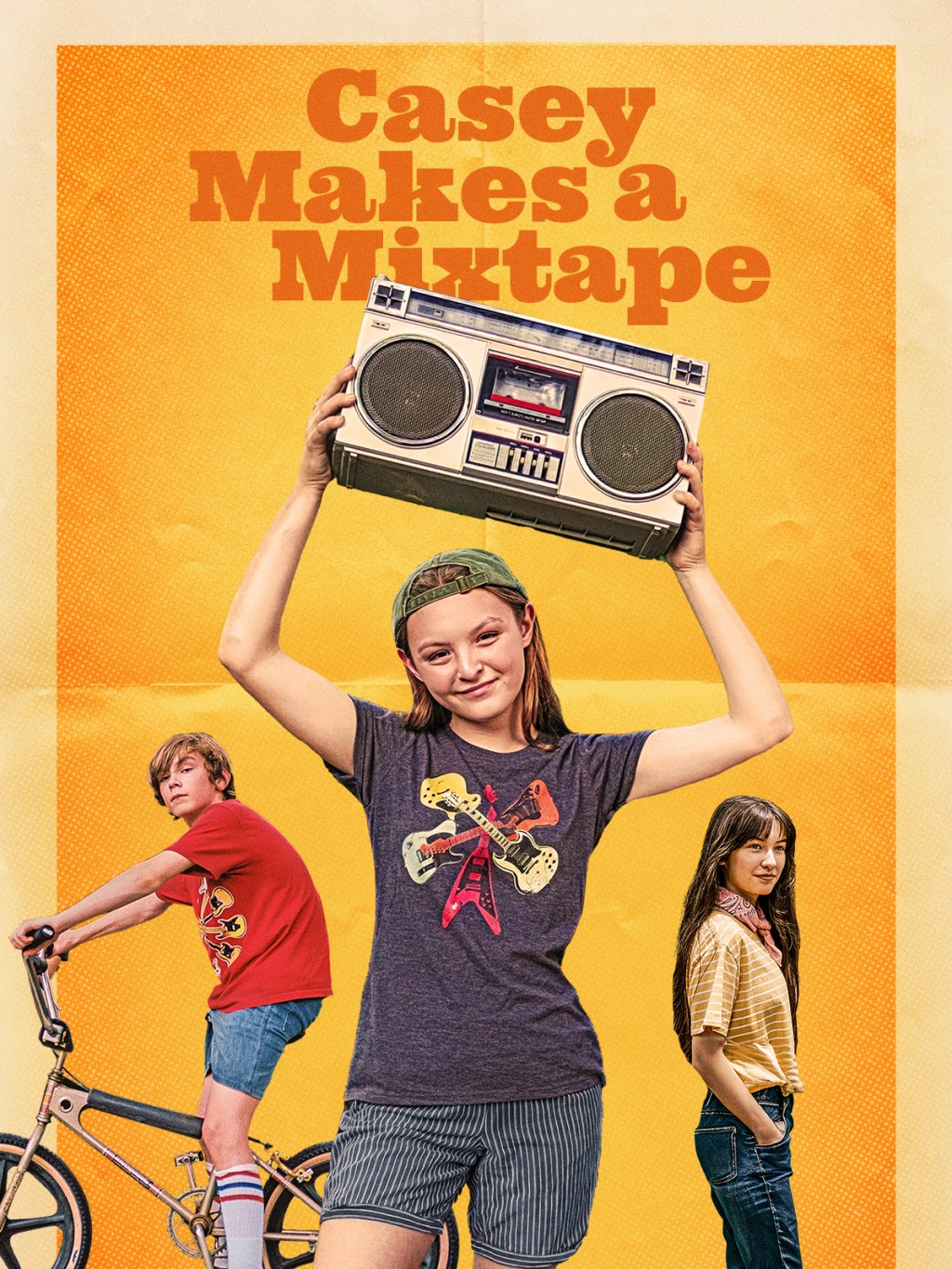
Casey Makes a Mixtape feels like the kind of movie you don’t just watch—you rewind it in your head afterward, letting certain scenes play again like favorite tracks on a worn cassette.
Set in 1981 and directed with quiet affection by award winning filmmaker Blake Calhoun, the film is a love letter to the age of analog discovery, when music didn’t arrive by algorithm but by accident, patience, and intention. This is a coming-of-age story powered not by spectacle, but by the soft click of cassette buttons, the hiss between songs, and the courage it takes to press “record” on your own feelings.
Casey, at the center of it all, isn’t trying to be iconic. She is just trying to figure things out. The mixtape becomes both shield and confession—an emotional roadmap assembled from radio snippets, borrowed vinyl, and moments stolen late at night. Each song choice feels deliberate, almost sacred, as if the order itself could somehow make sense of growing up, falling in love, or feeling invisible in a loud world.
What makes the film quietly devastating is how honestly it captures the DIY spirit of the era. There’s a scrappiness to everything: the bedrooms, the friendships, the dreams that feel too big for small towns and teenage hands. Calhoun doesn’t romanticize 1981 into glossy nostalgia; instead, he lets it live in its imperfections—uneven sound levels, awkward silences, and emotions that crack before they fully form.
For parents who lived through that era, Casey Makes a Mixtape hits like muscle memory. It remembers a time when music was a companion, not background noise—when sharing a mixtape was an act of vulnerability, almost a declaration of love. For today’s youth, the film feels strangely radical in its slowness, reminding us that connection doesn’t have to be instant to be real.
By the final reel, the mixtape is no longer just a collection of songs. It’s a time capsule, a first attempt at self-definition, and a reminder that growing up has always sounded a little messy, a little hopeful, and deeply personal.
Casey Makes a Mixtape doesn’t shout its emotions. It plays them softly, track by track—trusting that if you’ve ever loved music, or used it to survive a confusing season of life, you’ll recognize yourself somewhere between Side A and Side B.


 Inkmarksonemptydreams