
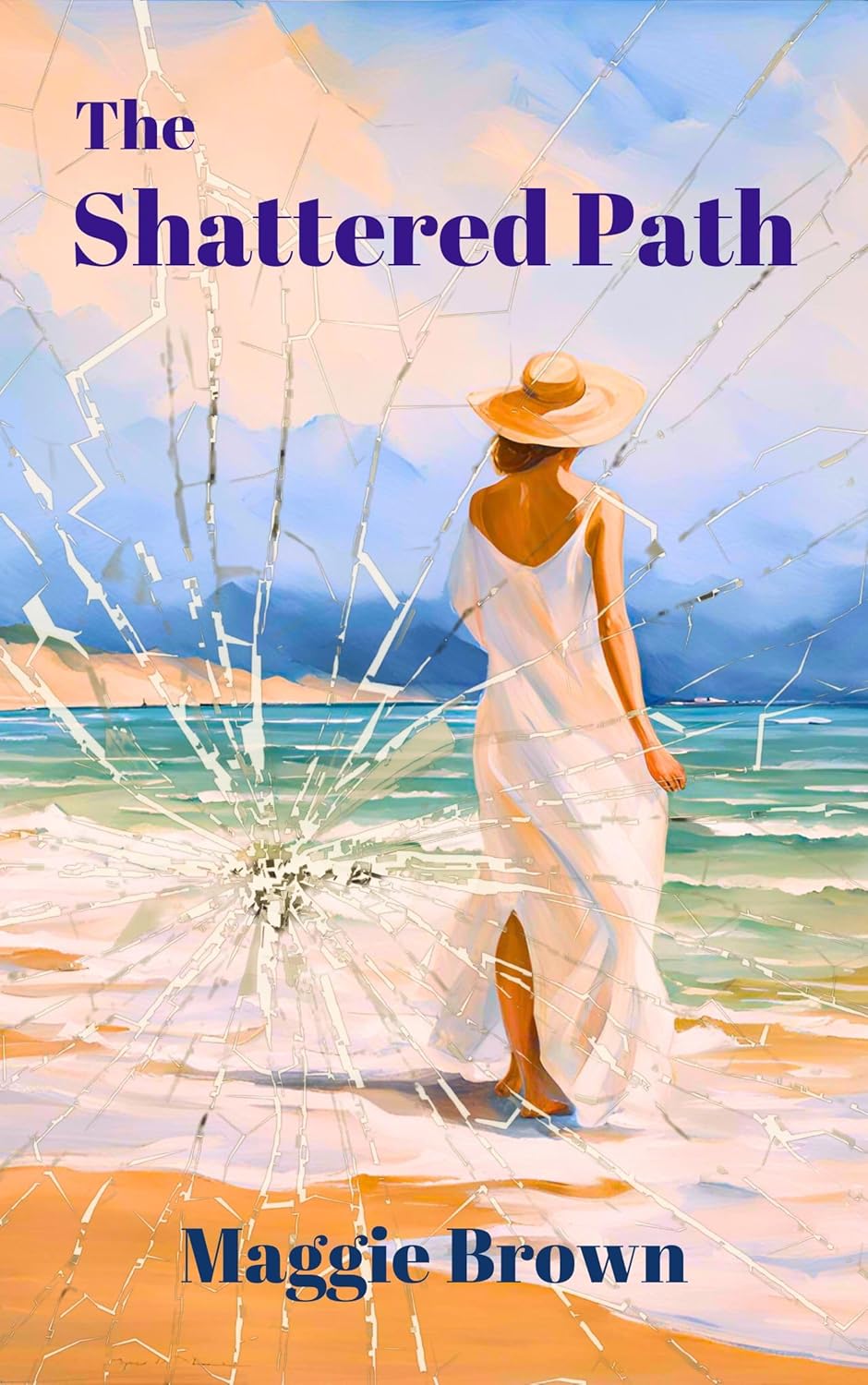
The Shattered Path is not just a love story—it’s a quiet reckoning with memory, identity, and the fragile courage it takes to love again when the past refuses to stay whole. Maggie Brown writes with a restrained, aching elegance, allowing silence, loss, and longing to do as much work as dialogue ever could.
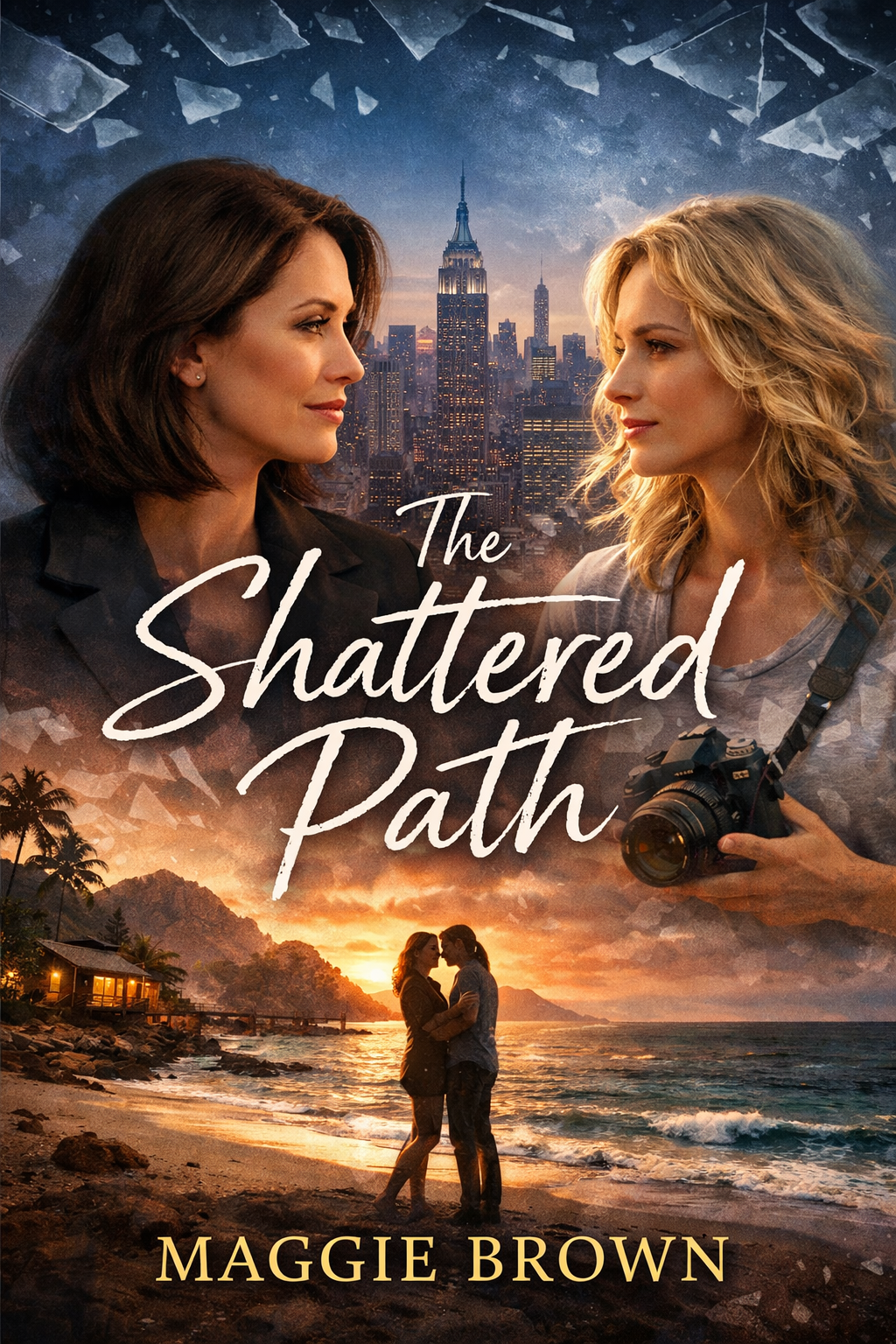
At the heart of the novel is the unlikely, unforgettable connection between Vanessa Templeton, the commanding head of a global media empire in New York, and Eden Ford, a renowned photographer whose life revolves around patience, light, and truth. Vanessa’s world is one of sharp edges and relentless momentum—glass towers, power lunches, public certainty. Eden’s is softer, shaped by landscapes and moments most people overlook. They should never have crossed paths. And yet, fate places them together on an isolated Australian island, far from ambition, expectation, and noise. They seem, at first glance, incompatible. Yet Brown’s genius lies in showing how opposites don’t just attract—they recognize each other.
Their meeting on an isolated Australian island feels almost mythic, suspended outside time. Removed from Vanessa’s power and Eden’s acclaim, they encounter each other as simply two women stripped down to presence. The island becomes a sanctuary where names, titles, and expectations dissolve. Love grows there not loudly, but inevitably—through shared silences, unguarded laughter, and the slow realization that being seen can be both terrifying and salvational.
On that island, Maggie Brown gives us something rare: a love born without performance. Vanessa is no longer an executive; Eden is not defined by acclaim. They meet as two women learning how to breathe again. Their connection unfolds gently—through shared silences, long walks, and the unspoken understanding that this place exists outside the rules of their real lives. It’s a love rooted in presence, not promises. And that is precisely what makes it so fragile.
Then comes the novel’s most devastating turn: shattered memory. Memory loss in The Shattered Path is not treated as a plot device, but as a moral and emotional wound. When memory fractures, love doesn’t vanish all at once—it erodes. Brown captures this loss with painful intimacy: the way recognition flickers and fails, how affection lingers without context, how the body remembers what the mind cannot. Eden becomes a ghost in a life that once held her fully. Vanessa, powerful and resourceful in every other arena, is rendered helpless in the face of forgetting.
What makes this story extraordinary is its refusal to romanticize suffering. Love does not “fix” memory, and memory does not guarantee love. Instead, the author asks a harder question: If you forget someone you once loved, was that love ever real? Her answer is quietly radical—love is real precisely because it leaves a mark, even when the mind lets go.
When memory loss fractures Vanessa’s life, the novel turns achingly intimate. Brown does not treat shattered memory as a dramatic twist, but as a slow, cruel erasure. Vanessa forgets Eden not all at once, but in pieces—names slipping away, faces blurring, emotions remaining without explanation. Love becomes a feeling without a story. Eden, once central, becomes a stranger in the narrative of Vanessa’s own life.
Yet the most haunting element of the novel is this: Vanessa dreams of Eden.
She dreams of a woman she cannot name.
She wakes with a sense of longing she cannot place.
She feels love without memory—and grief without loss.
These dreams are where The Shattered Path truly breaks your heart. Brown suggests that memory may fail, but the heart keeps its own archive. Eden survives in Vanessa’s subconscious as warmth, safety, and absence. It’s a powerful exploration of how real love imprints itself beyond logic—how it lingers even when identity and context are gone.
Their reunion in New York is painfully restrained and beautifully written. The city, cold and overwhelming, mirrors the imbalance between them. Eden remembers everything. Vanessa remembers nothing—and yet feels everything. There is no easy reclaiming of the past, no magical restoration. There is no cinematic rush back into each other’s arms. Instead, there is hesitation, grief, hope, and the terrifying possibility that love might have to begin again from nothing. Instead, there is tension, restraint, and the unbearable question: Can you fall in love again with the same person when only one of you remembers the first time?
This is a novel for anyone who has loved deeply, lost painfully, and wondered whether the heart remembers what the mind cannot. Quiet, devastating, and profoundly human, The Shattered Path reminds us that even when memory shatters, love may still be waiting—unfinished, unresolved, and achingly alive.
The Shattered Path understands that real love is not just found—it is lost, mourned, misremembered, and sometimes rediscovered in unfamiliar forms. Maggie Brown writes with deep compassion for women who are strong yet broken, successful yet lonely, capable of giving the world everything except certainty in love.
This is a novel for anyone who has ever wondered whether love survives when memory fails—and whether choosing each other again, without guarantees, might be the bravest act of all.
The Shattered Path is a tender, devastating meditation on love that survives even when memory does not. Maggie Brown writes with a quiet intensity, crafting a story that lingers long after the final page—like a half-remembered dream you can’t quite let go of, but feel deep in your bones.


 Inkmarksonemptydreams