
Rating: ⭐⭐⭐⭐½ (4.5/5)
There are television series that entertain us 📺. There are series that inform us 📚. And then… there are series that fundamentally change how we see the world 🌍. “The First Lady” belongs to this rare, precious third category.
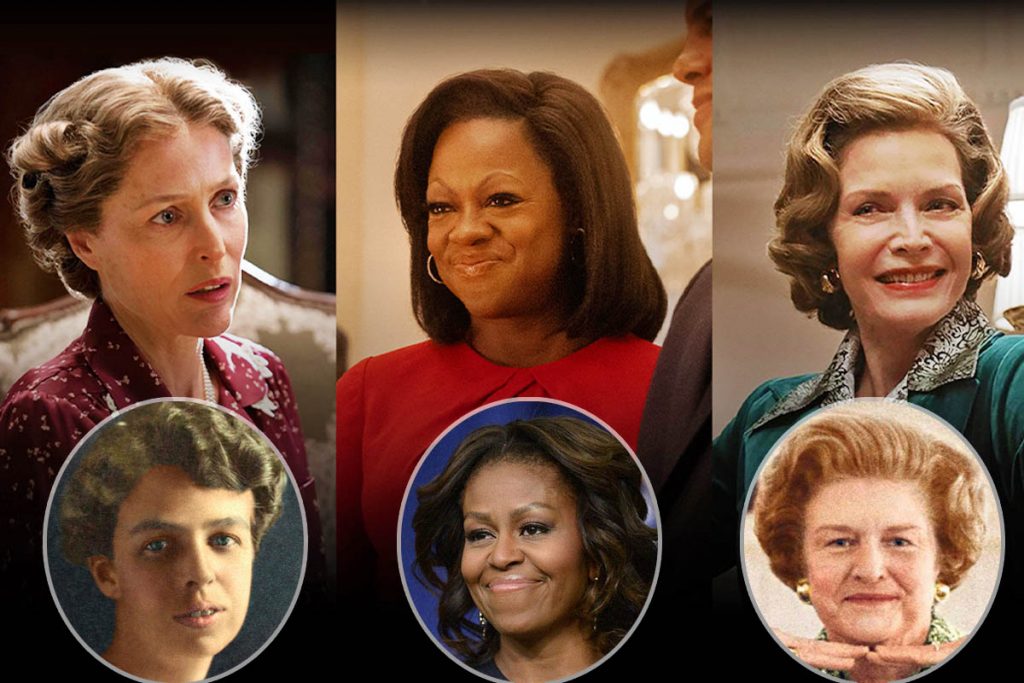
🎭 Three Women, Three Eras, One Unbreakable Truth
From the moment Viola Davis first appears on screen as Michelle Obama, you feel it 💫. That quiet strength. That burden of representing millions while maintaining your own identity. The camera lingers on her face, and you see not just an actress playing a role, but a window into a soul carrying the weight of history on her shoulders.
Viola Davis doesn’t play Michelle Obama. She becomes her. 🎬
Every gesture, every pause, every moment of vulnerability feels achingly real. When she struggles with the loss of privacy, when she fights to maintain normalcy for her daughters 👧👧, when she faces the racist caricatures and attacks with grace and dignity – you don’t just watch. You feel it in your chest. 😢
🕰️ Eleanor Roosevelt: The Pioneer Who Walked Alone
Gillian Anderson’s portrayal of Eleanor Roosevelt is nothing short of breathtaking 🌟. Here was a woman trapped in a loveless marriage 💔, discovering her husband’s infidelity, yet choosing to transform her pain into purpose.
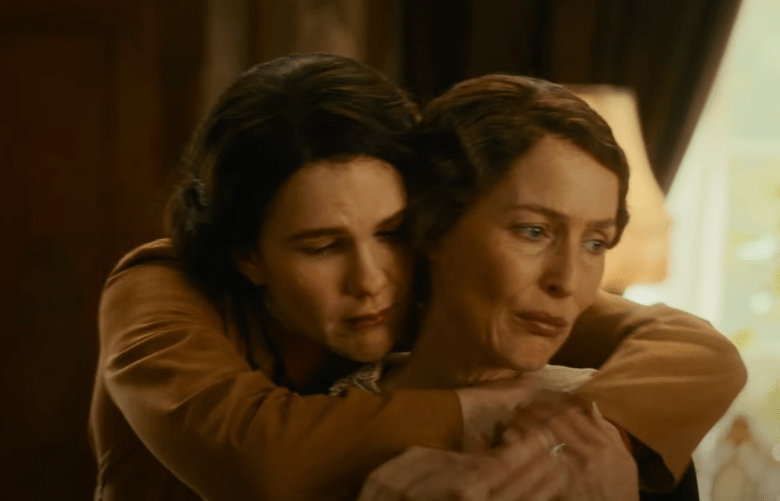
The scenes depicting Eleanor’s relationship with journalist Lorena Hickok are handled with such delicate intimacy 🥀. You see a woman who society forced into silence, finding her voice in the margins. Anderson captures Eleanor’s evolution from the dutiful wife to the fearless advocate with such nuance that you forget you’re watching a performance.
One particular scene destroyed me: 😭 Eleanor, alone in her room, reading another hateful letter about her activism. The camera stays on her face as a single tear falls. She doesn’t wipe it away. She lets it fall, takes a breath, and continues writing her newspaper column. That is resilience. That is strength.
🌸 Betty Ford: The Revolutionary in Pearls
Michelle Pfeiffer brings such warmth and vulnerability to Betty Ford 💕. This was a woman who spoke about breast cancer when no one did 🎗️. Who discussed addiction openly in an era of shame. Who dared to support women’s rights from the East Wing itself.
Pfeiffer’s Betty is both fragile and fierce 🦋. You see her struggling with alcohol and pills, isolated in her pain, yet somehow finding the courage to be radically honest with America. The scenes of her intervention are gut-wrenching 💊😰. Her family’s love mixed with their desperation. Her own denial crumbling in real-time.
The moment she decides to go public with her addiction recovery? 📢 Chills. Absolute chills. You realize you’re watching someone choose courage over comfort, truth over image.
🎨 The Cinematography of Emotion
The series doesn’t just tell these stories – it paints them 🖼️. The way the lighting changes across decades. Eleanor’s world often shown in shadows and muted tones, reflecting her constrained life. Betty’s bright exterior slowly dimming as her struggles intensify. Michelle’s world captured in warm, vibrant colors that somehow still feel isolating 🎨.
The parallel editing between the three timelines is genius 🧠✨. One moment, we see Eleanor fighting for civil rights in the 1940s. Cut to Betty advocating for the ERA in the 1970s. Cut to Michelle launching “Let’s Move” in 2010. Different eras, same battles, same resistance, same courage.
💪 What These Women Endured
This series will break your heart 💔, not because it’s sad, but because it reveals what these women sacrificed:
- Eleanor gave up personal happiness to become America’s conscience 🕊️
- Betty risked everything to normalize conversations about women’s health and addiction 🗣️
- Michelle endured relentless racism while maintaining impossible grace and composure ✊🏾
The show doesn’t shy away from the racism Michelle Obama faced 😤. The “angry Black woman” stereotype. The constant scrutiny of her body, her hair, her fashion, her everything. Viola Davis’s eyes tell the story of exhaustion that words cannot capture.
🎬 The Performances: Beyond Acting
These aren’t performances. They’re channeling 🔮.
Viola Davis makes you understand the impossible tightrope Michelle walked – being authentically herself while knowing every gesture would be analyzed, criticized, weaponized 🎯.
Gillian Anderson shows you a woman finding power in powerlessness, turning society’s rejection into revolutionary action 🔥.
Michelle Pfeiffer reveals the woman behind the smile, the pain behind the poise, the human being behind the icon 🌹.
😢 The Moments That Made Me Cry
I’m not ashamed to admit this series had me sobbing 😭:
- Eleanor reading her own obituary (drafted by Franklin’s mistress) while he’s still alive
- Betty’s daughter pleading with her to get help, the raw desperation in that scene
- Michelle’s “When they go low, we go high” speech, knowing what that dignity cost her
- Eleanor’s final conversation with Lorena, accepting that history would erase their love
- Betty seeing herself on TV after rehab, realizing she gave other women permission to heal
- Michelle watching her daughters grow up in the spotlight, unable to protect them from the world’s cruelty
🌟 Why This Series Matters NOW
In an era where women’s rights are being rolled back ⚖️, where first ladies are judged by their fashion choices more than their policies 👗, where strong women are still called “difficult” or “aggressive” 😠, this series is a battle cry 📣.
It reminds us that:
- Progress is not linear 📉📈
- Courage is not the absence of fear 💪😨
- Change requires sacrifice 🙏
- Women have always led, even when not given the title 👸
⚠️ Fair Criticisms
The series occasionally suffers from trying to cover too much ground 🏃♀️. Some storylines feel rushed. Some supporting characters underdeveloped. The jumping between timelines, while mostly effective, can occasionally feel jarring 🔄.
But these are minor flaws in an otherwise stunning tapestry of American history told through women’s eyes 👁️.
💭 Final Thoughts
“The First Lady” is not easy viewing 📺😔. It demands your attention, your empathy, your tears. It asks you to sit with uncomfortable truths about how America treats its most visible women, especially women of color.
Trailer :


 Inkmarksonemptydreams