
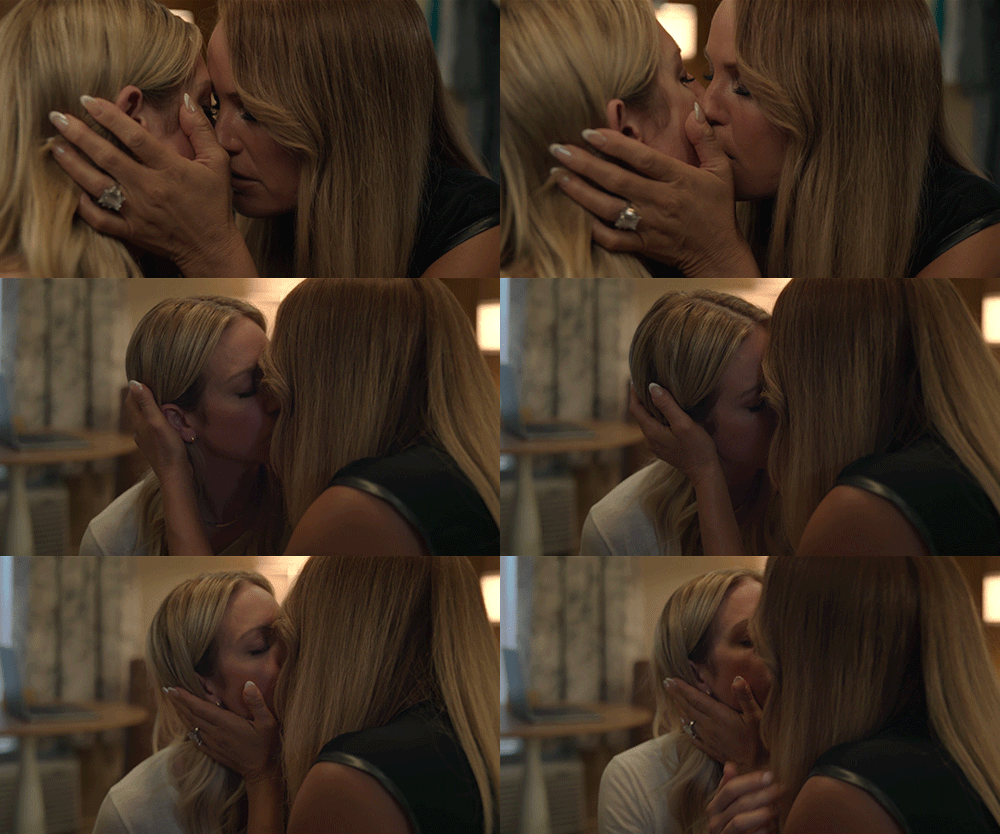
The Hunting Wives on Netflix isn’t just a thriller—it’s a slow, intoxicating descent into desire, power, and moral rot disguised as Southern glamour. At the heart of it all are two women who orbit each other like moths to a flame: Margo Banks (Malin Åkerman) and Sophie O’Neil (Brittany Snow). Their connection is the engine of the series—and ultimately, its most dangerous weapon.
Margo Banks is temptation incarnate. Malin Åkerman plays her with a hypnotic calm, the kind of woman who doesn’t need to raise her voice to dominate a room. Margo isn’t merely reckless; she is intentional in her chaos. She understands people’s weaknesses instinctively and treats morality as a flexible suggestion. Guns, sex, and secrets are just extensions of her personality—tools she uses to feel alive and to control the narrative around her. Watching Margo is unsettling because she never pretends to be innocent; she dares others to follow her anyway.
Enter Sophie O’Neil, and suddenly the story gains its emotional gravity. Brittany Snow gives Sophie a quiet fragility that feels painfully real. Sophie arrives yearning for belonging, craving excitement, and deeply dissatisfied with the neat, bloodless version of life she’s been handed. What makes Sophie compelling is not her naivety, but her slow, aching awakening. She knows—long before she admits it—that Margo represents everything she has denied in herself: desire, rage, hunger, and the thrill of crossing lines that cannot be uncrossed.
Their relationship is charged with something far more complex than friendship. It’s seduction without labels, intimacy without safety. Margo pulls; Sophie resists—and then leans in. The tension between them is erotic, psychological, and deeply tragic. You don’t watch Sophie fall; you feel her unravel. And you sense that Margo, whether consciously or not, is both architect and executioner of that transformation.
The murders in Season 1 are not treated as mere plot devices. They feel inevitable—like the final punctuation mark at the end of a sentence written in obsession and denial. Violence in The Hunting Wives isn’t explosive; it’s suffocating. Each death carries the weight of accumulated choices, of moments where someone could have stopped and didn’t. The show understands that murder doesn’t begin with a gunshot—it begins with complicity, silence, and desire left unchecked.
What makes the aftermath so chilling is the emotional residue. Guilt doesn’t arrive cleanly. It leaks. It festers. Sophie’s inner fracture becomes impossible to ignore, while Margo’s composure grows more frightening with every episode. You’re left questioning not just who is responsible, but how much responsibility belongs to everyone who watched the line blur and chose not to step back.
As Season 2 looms, the tension isn’t about whether there will be more blood—it’s about exposure. How long can Margo remain untouchable? How much of herself has Sophie already lost? And what happens when desire turns inward, when the thrill that once felt like freedom starts demanding a heavier price?
The Hunting Wives succeeds because it refuses easy answers. It tells a story about women who are allowed to be dangerous, selfish, sexual, and morally compromised—and it doesn’t punish them with caricature. Instead, it lets them be human in the most uncomfortable ways.
Season 1 leaves you uneasy, haunted, and complicit. Season 2 promises something darker still—not just more murder, but a reckoning. And if it dares to go where the emotional logic of these characters leads, it won’t just shock—it will devastate.


 Inkmarksonemptydreams